
The Spanish Octopus: A Culinary Marvel
Introduction
Octopuses have long captivated our imagination with their mysterious intelligence and graceful movements. Among these enigmatic creatures, the Spanish octopus (Octopus vulgaris) stands out as a culinary delight. In this blog post, we’ll explore the fascinating world of the Spanish octopus, from its habitat to its role on our dinner plates.
Anatomy and Behaviour
The Spanish octopus belongs to the order Octopoda, characterised by its eight arms and remarkable adaptability. Here are some key points about this intriguing cephalopod:
- Habitat: The Spanish octopus is widely distributed in shallow waters around the world. From the Mediterranean Sea to the coasts of Japan, it thrives in diverse marine environments
- Appearance: Picture a mouse-sized octopus with tentacles like knotted threads—ghostly pale except for its big, black eyes. Its prehensile grace and mysterious allure have made it a favourite subject for marine enthusiasts and culinary aficionados alike.
- Intelligence: Spanish octopuses are highly intelligent. Their big brains, complex behavior, and precocious curiosity have turned them into mediagenic poster creatures for animal rights and welfare. They’re more than just tasty tidbits; they’re charismatic beings that inspire awe.
Lifespan and Reproduction
The life cycle of the Spanish octopus is both fascinating and brief:
- Lifespan: These cephalopods live for approximately 1 to 2 years. Their rapid growth and relatively short lives contribute to their culinary appeal.
- Reproduction: Like other octopuses, the Spanish octopus reproduces once in its lifetime. Males transfer a specialized arm called a hectocotylus to females during mating. The female then lays thousands of eggs, which she guards diligently until they hatch. After hatching, the mother dies, completing her life cycle.
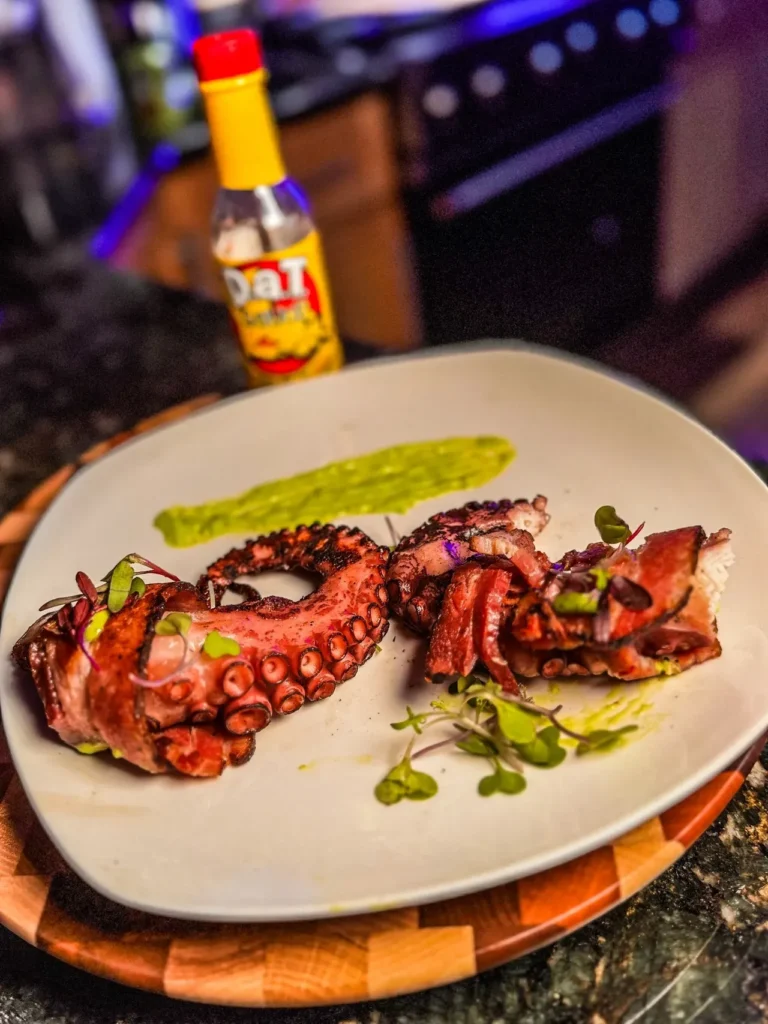
Culinary Delicacy
Why is the Spanish octopus so popular on our plates? Let’s delve into its culinary allure:
- Taste and Texture: Spanish octopus meat is tender, flavorful, and slightly sweet. When cooked properly, it becomes a succulent delicacy that melts in your mouth.
- Versatility: From tapas in Spain to sushi in Japan, octopus has conquered global cuisines. Its versatility allows chefs to create a wide range of dishes, from grilled octopus with paprika to octopus carpaccio.
- Sustainability: As wild octopus populations face pressure due to overfishing and climate change, sustainable aquaculture offers a solution. Efforts to farm Spanish octopuses aim to meet the growing demand while preserving wild ecosystems1.
Ten Cool Facts About Octopus
- Brainy arms: Two-thirds of an octopus’s neurons reside in its arms, not its head! This allows their arms to act somewhat independently, even after being severed.
- Triple the heart: Unlike humans, octopuses have three hearts! Two pump blood through the gills, while the third circulates blood throughout the body.
- Masters of disguise: These clever creatures can rapidly change their skin color, texture, and even bioluminescence to blend seamlessly into their surroundings.
- Tool users: Octopuses have been observed using tools like coconut shells as shelters and even carrying rocks to crack open clams.
- Underwater architects: Some octopus species are known to build intricate “dens” out of rocks, coral, and other materials.
- Ink defense: When threatened, octopuses release a cloud of dark ink to confuse predators, giving them time to escape.
- Regeneration champions: If an arm is lost to a predator, an octopus can regrow a complete limb, including muscles, nerves, and suckers.
- Deadly beauty: While most octopuses are not harmful to humans, the blue-ringed octopus carries a potent venom that can be fatal.
- Devoted mothers: Female octopuses lay huge clutches of eggs and then tirelessly guard them until they hatch, often neglecting to eat and dying shortly after.
- Ancient lineage: Fossil evidence suggests octopuses have been around for a staggering 296 million years, making them one of the oldest animal groups on Earth.
Conclusion
Next time you savor a plate of tender octopus, remember the intricate journey it took—from the depths of the sea to your table. The Spanish octopus embodies both culinary excellence and ethical debates, making it a creature worth celebrating and protecting. To enjoy an incredible dish you can find my recipe for Bacon Wrapped Octopus with a Wasabi Cream Sauce here: https://ukulelejaybbq.com/spanish-octopus