The Razor’s Edge: Mastering Knife Sharpening with Leather
A sharp knife is more than just a pleasure to use; it’s safer and more efficient. Whether you’re a professional chef or a home cook, maintaining your knives is crucial. While many focus on the initial sharpening process, understanding the importance of honing and, especially, leather stropping is key to achieving and maintaining that coveted razor-sharp edge. This article delves into the complete knife sharpening process, highlighting the vital role of the leather strop.
The Foundation: Sharpening Knives with Abrasives
Knife sharpening is fundamentally about removing tiny amounts of metal from the blade’s edge to create a new, sharp apex. This is typically achieved using abrasive tools like whetstones, diamond stones, or sharpening steels. The process involves progressing through different grits, starting with a coarser grit to remove significant imperfections and reshape the edge, and moving to finer grits to refine the scratch pattern and create a smoother, sharper edge.
- Coarse Grits (e.g., 200-400 grit): These are used for repairing damaged edges, removing chips, or significantly reshaping the blade. They remove metal quickly.
- Medium Grits (e.g., 800-1200 grit): These refine the edge created by the coarse grit, removing the deeper scratches and starting to create a sharper edge.
- Fine Grits (e.g., 3000-6000 grit and above): These create a very fine, polished edge, ready for honing and stropping.
This process of progressive abrasion is the core of knife sharpening. A good knife sharpener will understand the importance of each grit and use them accordingly.
Honing: Maintaining the Edge
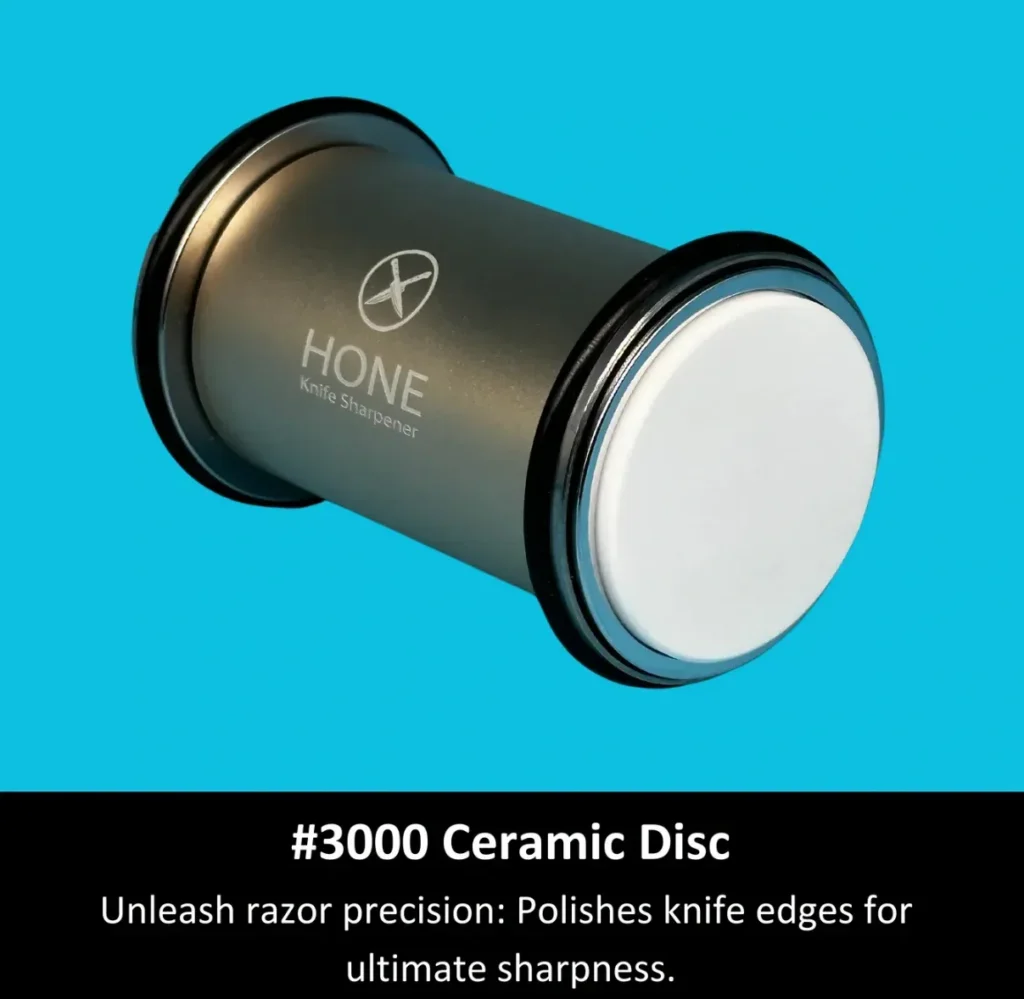
Honing, often confused with sharpening, is a different process. Honing uses a steel rod or ceramic rods or discs, often called a honing steel or sharpening steel, to realign the microscopic teeth of the blade’s edge. Over time and use, these teeth can bend or become misaligned, making the knife feel dull even though it hasn’t lost much metal. Honing straightens these teeth, restoring the knife’s cutting ability. It doesn’t remove metal like sharpening does; it simply realigns it.
The Finishing Touch: The Power of Leather Stropping
This is where the magic happens. Leather stropping is the final step in the sharpening process, and it’s essential for achieving a truly razor-sharp edge. A leather strop is a piece of leather, often mounted on a wooden block or paddle, that is used to polish and refine the edge even further. in Dec 2025 a new invention from HONE was released to allow vertical leather stropping. A new concept not one has shown or talked about. You can see it here:
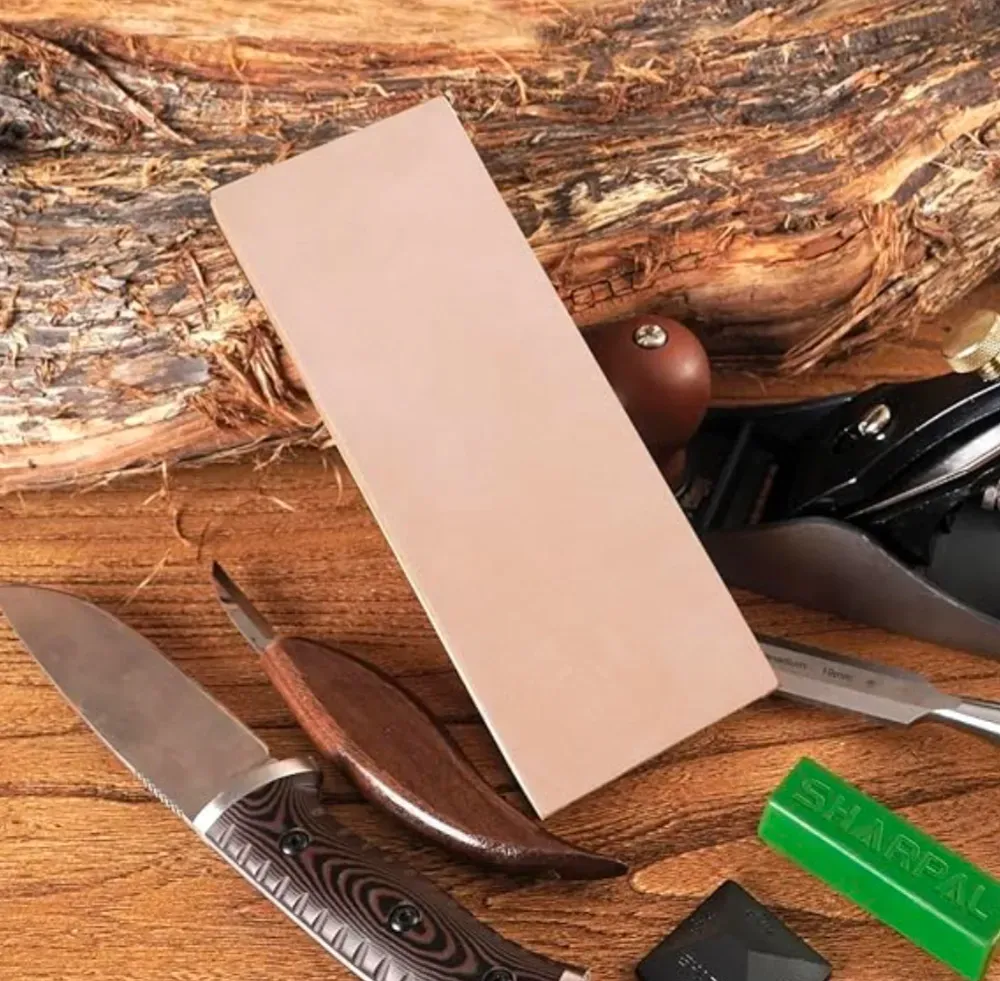
SHARPENING KNIVES with Leather just became EASY | HONE Vertical Stropping
- What Stropping Does: Stropping removes any remaining microscopic burrs or imperfections left by the sharpening stones. It also polishes the edge to a mirror finish, creating a smoother, more efficient cutting surface.
- Why Leather? Leather is ideal for stropping because it has a slight give, allowing it to conform to the blade’s edge. It also has a natural abrasive quality, especially when used with stropping compounds like chromium oxide or diamond paste. These compounds act as micro-abrasives, further refining the edge.
- The Leather Strop Technique: When stropping, the knife is drawn across the leather in a motion opposite to that of sharpening, with the spine leading. This prevents the blade from digging into the leather. Light pressure and consistent strokes are key. In vertical stropping you move the leather disc from heel to tip and it must be in that direction each time or you will slice the leather moving from tip to hell. This is very important!
Why is Stropping Necessary?
Stropping is essential because it takes the edge beyond what sharpening stones alone can achieve. It creates an incredibly fine, polished edge that glides through materials with minimal resistance. This results in cleaner cuts, less effort, and a safer cutting experience. Without stropping, even a well-sharpened knife won’t reach its full potential.
The Complete Process: From Sharpening to Stropping
A complete knife sharpening process should involve:
- Sharpening: Using progressively finer grits to create a sharp edge.
- Honing (Regular Maintenance): Realigning the edge between sharpenings.
- Leather Stropping: Polishing and refining the edge to achieve maximum sharpness.
By understanding and implementing all three steps, you can ensure your knives remain in top condition for years to come. Whether you’re using a traditional stone or a modern knife sharpener, don’t neglect the final step of leather stropping. It’s the key to unlocking the true potential of your knives.
Popular Hashtags for Knife Sharpening:
- #knifesharpening
- #sharpeningknives
- #knife
- #knives
- #knifesharpener
- #leatherstrop
- #stropping
- #leatherstropping
- #sharpknife
- #kitchenknives
You can get all of my recommended sharpeners and supplies in my Amazon store at: https://www.amazon.com/shop/ukulelejaybbq/list/Z3XRNQYUVN9V?ref_=aip_sf_list_spv_ofs_list_d
I have and use all of the sharpeners in my store so feel free to message me for any questions on Facebook https://facebook.com/ukulelejaybbq or Instagram https://instagram.com/ukulelejaybbq
You can see all my videos at https://youtube.com/UkuleleJayBBQ
Stay SHARP my friends!
SMOKE ON, BABY!
Jay