The Story of the Weber Grill: History, Hidden Trivia, and a Legendary Recipe
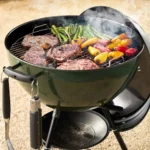
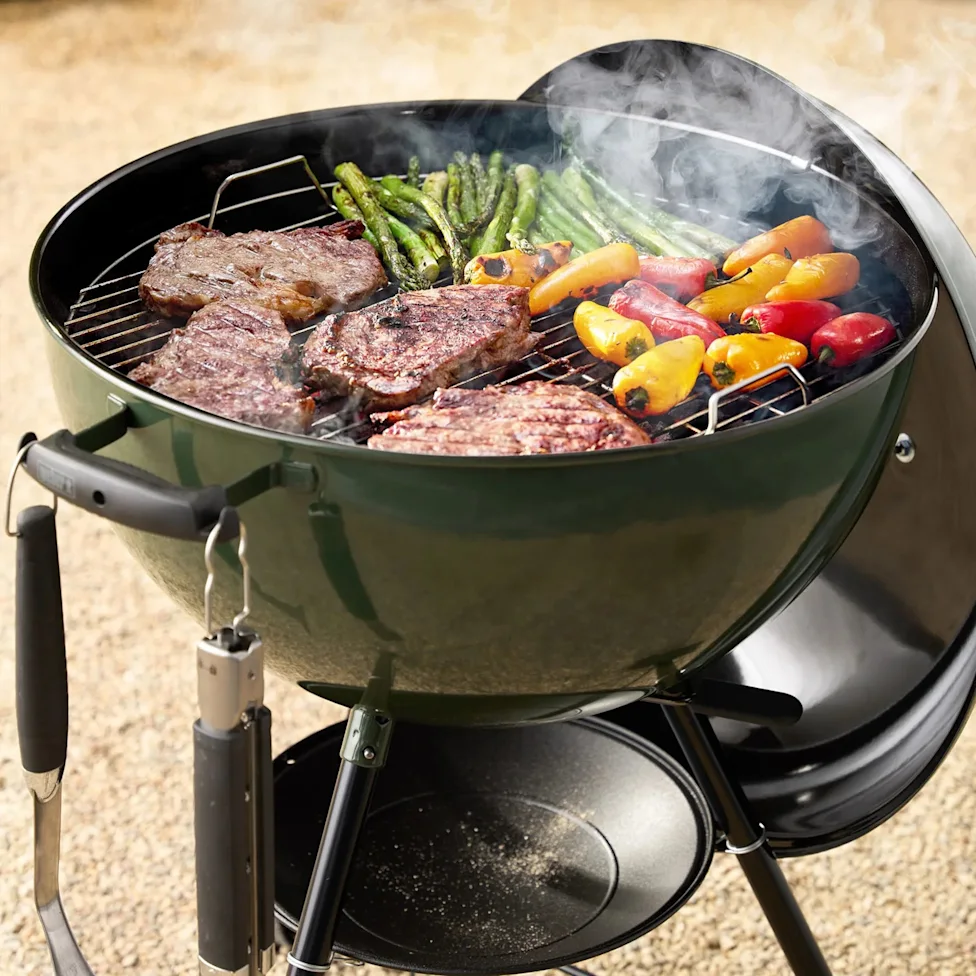
If you’ve ever enjoyed a perfectly seared steak, a smoky rack of ribs, or a classic backyard burger, you likely owe a debt of gratitude to one specific silhouette: the dome-shaped Weber kettle grill.
Table of contents
For over seven decades, Weber has been the undisputed heavyweight of backyard cooking. But the iconic charcoal grill we know today didn’t come from a drawing board in a culinary institute. It started at a metal works factory with a giant floating buoy.
Here is the rich history of the Weber grill, the fascinating trivia most people don’t know, and a competition-worthy BBQ recipe optimized for your kettle.
The Invention: How a Buoy Changed BBQ History
Before the 1950s, backyard grilling was a frustrating affair. Most Americans used open, shallow brick or sheet-metal brazier grills. If a sudden gust of wind caught the fire, your steak was covered in ash; if a rain shower hit, dinner was ruined. Even worse, the open flames constantly flared up, charring the outside of the meat while leaving the inside raw.
Enter George Stephen. In 1952, Stephen was a father of eleven working at Weber Brothers Metal Works in Chicago, Illinois, a shop that manufactured metal harbor buoys for the U.S. Coast Guard.
Stephen was determined to find a way to control the temperature of his backyard cookouts. Looking at the heavy spun-iron marine buoys at work, an idea struck him. He took one of the spherical buoy halves, welded three legs to the bottom, punched ventilation holes in it, and used the top half as a lid.
The lid changed everything. By holding the heat inside, reflecting it around the meat, and allowing air control through dampers, Stephen created the world’s first convection-style backyard cooker. Neighbors initially laughed and called it “Sputnik” after the Soviet satellite, but the jokes stopped once they tasted the incredibly juicy food it produced.
Mind-Blowing Weber Trivia You Probably Don’t Know
How Many Have Been Sold?
While Weber fiercely guards its exact internal sales metrics, historical estimates and global production data indicate that Weber has sold well over 50 million to 100 million charcoal kettle grills worldwide since day one. It remains one of the most successful consumer product designs in American history.
The Grills Were Originally Covered in Ship Paint
Because George Stephen built the first prototypes out of marine buoys, the early commercial models used porcelain enamel finishes engineered to withstand brutal ocean conditions. This ultra-durable coating is the reason why many vintage 1960s and ’70s Weber kettles are still completely rust-free and functional today.
The “One-Touch” Cleaning System Changed the Game
In the early days, cleaning out the ash meant scooping it out by hand or tipping the heavy grill over. In the 1980s, Weber introduced the internal three-blade sweeping system. It didn’t just dump ash; the blades acted as a secondary airflow regulator, allowing cooks to dial in low-and-slow temperatures with precision.
The Ultimate Weber Brisket Recipe: The “Low and Slow” Kettle Smoked Beef Brisket
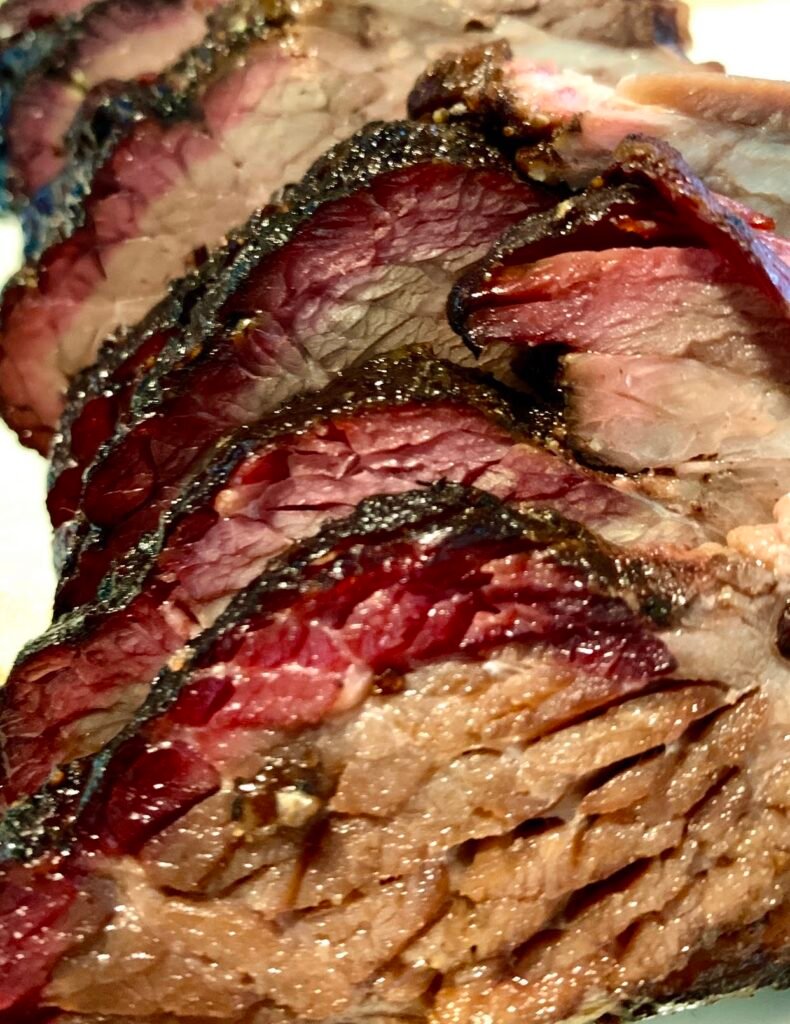
Many people think you need a massive, dedicated offset smoker to cook a legendary Texas-style beef brisket. The truth? The convection airflow of a standard 22-inch Weber kettle makes it one of the absolute best tools for smoking meat using the Snake Method.
- Prep time: 30 minutes
- Cook time: 10 to 12 hours
- Servings: 10-12
Ingredients
- 1 whole “packer” beef brisket (10-12 lbs), trimmed
- 1/4 cup coarse kosher salt
- 1/4 cup coarse black pepper (16-mesh is ideal)
- 1 tbsp garlic powder
- 3-4 chunks of oak or hickory wood
- High-quality charcoal briquettes (unregulated, plain briquettes hold the steady temp best)
Step-by-Step Instructions
1.Build the Charcoal Snake:Setup.
Arrange your unlit charcoal briquettes around the inner perimeter of your Weber kettle. Lay them two-wide and two-high in a semi-circle along the grate wall, resembling a snake. Place your wood chunks on top of the first few rows of the snake. Place a disposable aluminum pan filled with warm water in the center of the bottom grate to act as a heat deflector and moisture source.
2.Season the Brisket:Prep.
Mix the salt, pepper, and garlic powder together. Apply the rub generously to all sides of the brisket until fully coated. Let it sit at room temperature while you start the grill.
3.Light and Stabilize:Target 225-250°F.
Light exactly 10-12 charcoal briquettes in a chimney starter. Once ash-over occurs, place them carefully at the very beginning of your charcoal snake. Close the lid, leave the top vent half open, and adjust the bottom vents until your temperature holds steady between 225°F and 250°F (107°C to 121°C).
4.The Initial Smoke:5-6 hours.
Place the brisket fat-side up on the top cooking grate, directly above the water pan (away from the burning coals). Put the lid on, making sure the top exhaust vent is positioned directly over the meat to draw the smoke across it. Let it smoke undisturbed until the internal temperature hits roughly 165°F (74°C) and a dark, crusty bark forms.
5.The Texas Crutch:3-4 hours.
Remove the brisket from the grill and wrap it tightly in peach butcher paper (or heavy-duty aluminum foil). Place it back on the kettle. Continue cooking until the internal temperature reaches 203°F (95°C) and a meat probe slides into the thickest part of the brisket with zero resistance, like warm butter.
6.The Crucial Rest:Minimum 1 hour.
Pull the wrapped brisket off the heat. Wrap it in an old towel and place it inside an empty cooler for at least 1 to 2 hours. This step allows the muscle fibers to relax and reabsorb all the juices. Slice against the grain and serve!
Frequently Asked Questions (FAQ)
Why does my Weber kettle lose heat during long cooks?
If your temperature drops sharply, check your bottom vents. Ash accumulation can block the air intake holes, starving the coals of oxygen. Give your One-Touch cleaning handle a few sweeps to clear the path.
Should I use lump charcoal or briquettes for smoking?
For long, slow cooks on a Weber kettle, uniform briquettes are highly recommended. Lump charcoal burns hotter and more inconsistently due to irregular piece sizes, whereas high-quality briquettes give you a perfectly predictable burn rate.
Make sure to subscribe for the latest newsletter and SMOKE ON, BABY!
SUBSCRIBE: https://youtube.com/ukulelejaybbq for great video content.
FOLLOW ME: https://instagram.com/ukulelejaybbq for daily postings.
FACEBOOK FANS: https://facebook.com/ukulelejaybbq.
AMAZON DEAL COOKING STORE: https://amazon.com/shop/ukulelejaybbq for all my top picks and current deals.