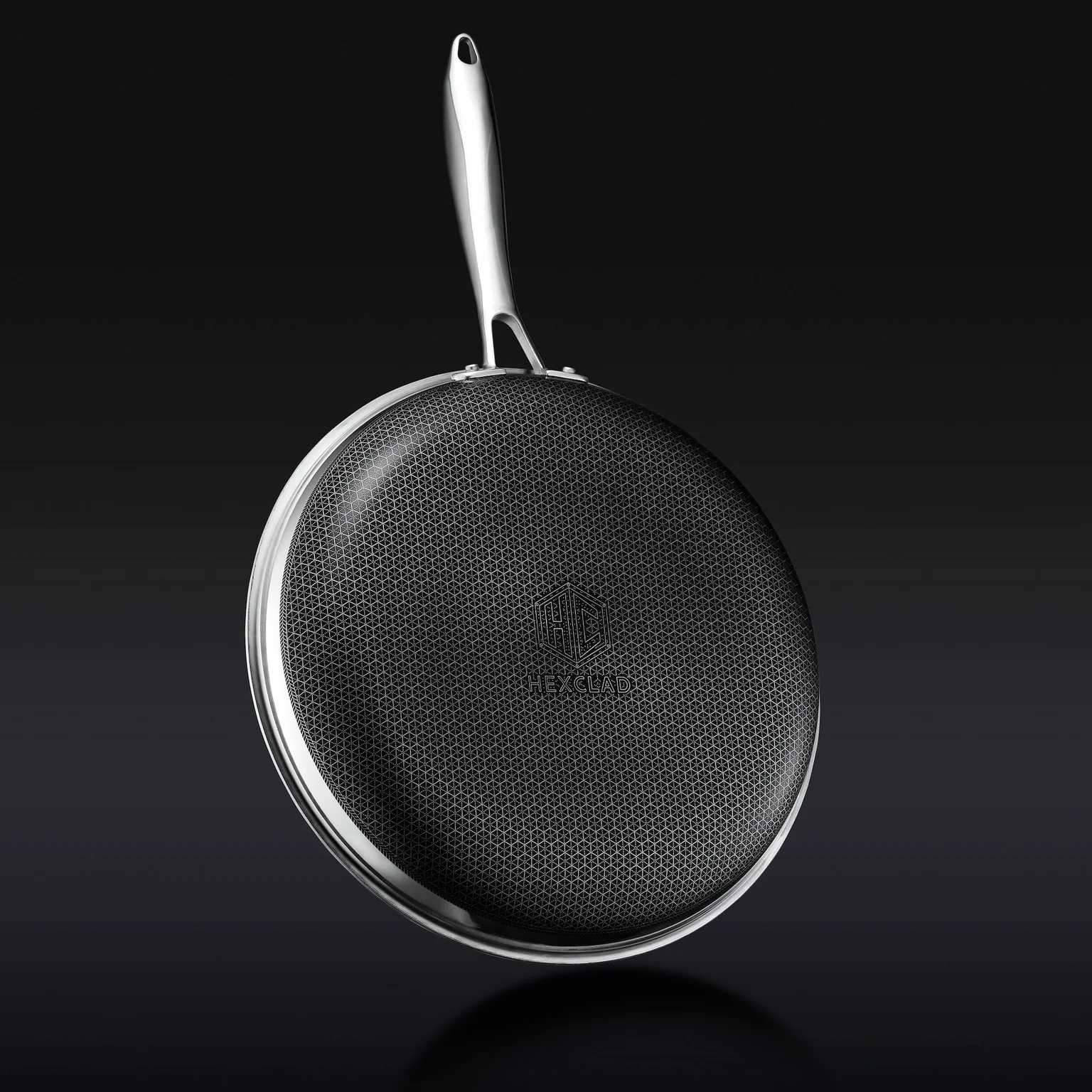
Your HexClad pans start out sleek, shiny, and flawless. But after years of real cooking—searing steaks, frying eggs, building flavor—they begin to develop a patina.
That copper-toned layer on the stainless steel? It’s proof your pans are being used the right way.
But not everyone loves that “seasoned” look.
If you’re wondering how to clean HexClad pans, remove discoloration, and restore that factory shine, this step-by-step guide will walk you through exactly how to do it—safely and effectively.
🔥 The HexClad Patina Dilemma: Keep It or Remove It?
Picture this…
You pull your favorite HexClad pan from the cabinet. The once-bright stainless steel now has a warm, golden patina from years of cooking.
So what do you do?
- Embrace the patina as a badge of honor?
- Or restore that like-new shine?
After six years of daily use (1–2 cooks per day, six days a week), I’ve seen both sides. Some cooks love the character. Others want that clean, polished look back.
👉 The good news: You can have both.
This guide shows you how to restore your HexClad pans—without damaging them.
🧠 Understanding HexClad Wear: Why Your Pans Change Color
🔄 Patina vs. Brand-New Finish
HexClad pans use a hybrid stainless steel + nonstick surface, and over time:
- Heat exposure causes oxidation
- Oils and food create buildup
- Stainless steel develops a copper or brown tint
If you’re ever unsure how hot your pan is actually getting, a reliable thermometer takes the guesswork out of it
When new:
- The surface is bright
- Logos are crisp
- The hex pattern stands out
After heavy use:
- A dull film appears
- The shine fades
- Discoloration builds, especially on the bottom
👉 This is completely normal—but it doesn’t mean it’s permanent.
⚠️ When Your HexClad Pan Needs Deep Cleaning
Patina is fine… until it becomes buildup.
Look for:
- Dark or black spots
- Uneven discoloration
- Sticky cooking surface
- Loss of nonstick performance
Check the signature hex pattern:
- Clean lines = good condition
- Dark, filled-in grooves = buildup
👉 If food starts sticking more than usual, it’s time to restore your pan.
🧰 Tools You Need to Clean HexClad Pans
You don’t need expensive gear—just a few proven essentials:
- SOS pad (for heavy-duty scrubbing)
- Bar Keepers Friend (powder form)
- Dish soap
- Soft sponge
- Microfiber or soft cloth
💡 Pro Tip: Always test one pan first before doing your full set. And if your cutting board is due for an upgrade too, this is the board I actually use in my own kitchen.”
💧 Step 1: Prep Your HexClad Pan for Cleaning
Before you start scrubbing:
- Rinse the pan with warm water
- Let the surface stay slightly damp
- Shake off excess water
👉 Why this matters:
A damp surface reduces scratching and helps cleaning products spread evenly.
🧽 Step 2: Remove Discoloration with Targeted Scrubbing
Start with the toughest areas first.
How to Do It:
- Use an SOS pad
- Scrub in circular motions
- Focus on edges and heavily discolored spots
Watch closely—you’ll see the stainless steel shine start to return almost instantly.
💡 Start small:
Test a small section first. Once you see results, continue across the pan.
⚠️ Tip:
- Follow the grain of the steel
- Avoid aggressive scrubbing over logos
✨ Step 3: Polish with Bar Keepers Friend
Now it’s time to bring back that signature HexClad shine.
How to Apply:
- Sprinkle Bar Keepers Friend onto the damp pan
- It will form a light paste
- Scrub evenly across the entire surface
Focus Areas:
- Bottom of the pan (highest heat exposure)
- Discolored zones
- Around the hex pattern
👉 You’ll notice:
- Brown tint disappears
- Logos pop again
- The hex pattern becomes crisp and defined
💡 Rinse periodically while scrubbing to remove residue and check progress.
🚿 Step 4: Rinse Thoroughly (Don’t Skip This!)
Once the shine is back:
- Rinse with hot water immediately
- Wash with soap for at least 30 seconds
- Remove all cleaning residue
👉 Why this is critical:
Leftover cleaner can affect food taste and cooking performance.
Dry with a soft cloth and lightly buff the surface.
🔍 Step 5: Inspect Your Results
Hold your pan under light.
Look for:
- Even shine across the surface
- No dull or cloudy spots
- Clean hex pattern grooves
If needed:
- Repeat cleaning in missed areas
👉 Want a slightly aged look?
Stop early and leave a hint of patina—it’s your call.
Prefer to skip the scrubbing altogether? I also offer pan restoration and cookware care services if you’d rather have it done for you.
🔥 Step 6: Re-Season Your HexClad Pan (CRUCIAL)
Here’s the step most people miss…
⚠️ Deep cleaning removes seasoning.
That means:
- Nonstick performance drops
- Food may stick
- Cooking becomes frustrating
How to Re-Season:
- Apply a thin layer of oil
- Heat the pan gently
- Wipe off excess
- Let it cool
👉 This rebuilds the protective layer and restores performance.
🏁 Final Results: Like-New HexClad Performance
Once cleaned and re-seasoned, your HexClad pan will:
- Look nearly brand new
- Perform like it did on day one
- Cook more evenly
- Release food more easily
🔑 Quick Recap: How to Clean HexClad Pans
- Scrub with SOS pad to remove buildup
- Polish with Bar Keepers Friend
- Rinse thoroughly for 30 seconds
- Dry and inspect
- Re-season to restore nonstick
👨🍳 Final Thoughts: Shine or Patina—Your Choice
HexClad pans are built to last—and to tell a story.
- Love the patina? Keep it.
- Want that showroom shine? Now you know how to get it back.
Even Gordon Ramsay backs these pans for a reason—they perform under pressure.
So whether you’re restoring or embracing the wear…
🔥 Keep cooking, keep experimenting, and keep that pan working for you.
Frequently Asked Questions (FAQ)
Is HexClad dishwasher safe?
Yes, HexClad pans are dishwasher safe, but I’d still recommend hand washing — especially if you’re dealing with discoloration or buildup. Hand washing gives you far more control and lets you check your progress as you clean, which the dishwasher can’t do
Can I use steel wool instead of an SOS pad?
You can, but I’d be cautious — steel wool is more abrasive than an SOS pad and can leave fine scratches on the stainless steel if you scrub too hard. I’ve tested the SOS pad method extensively and know it works safely, so that’s what I recommend if you want predictable results.
Keeping That Shine Longer
A little regular care keeps future discoloration at bay. Avoid leaving the pan empty over high heat, clean it soon after cooking, and don’t let grease sit and build up.
Staying on top of this makes future deep cleans easier — you won’t need to wait for heavy discoloration to build before giving it a quick wash and dry. Catching it early means cleaning a small spot instead of restoring the whole pan.
The same logic applies to your other kitchen tools too — if you haven’t conditioned your cutting board in a while, it’s worth doing at the same time.